
City guide
Living in Ayia Napa
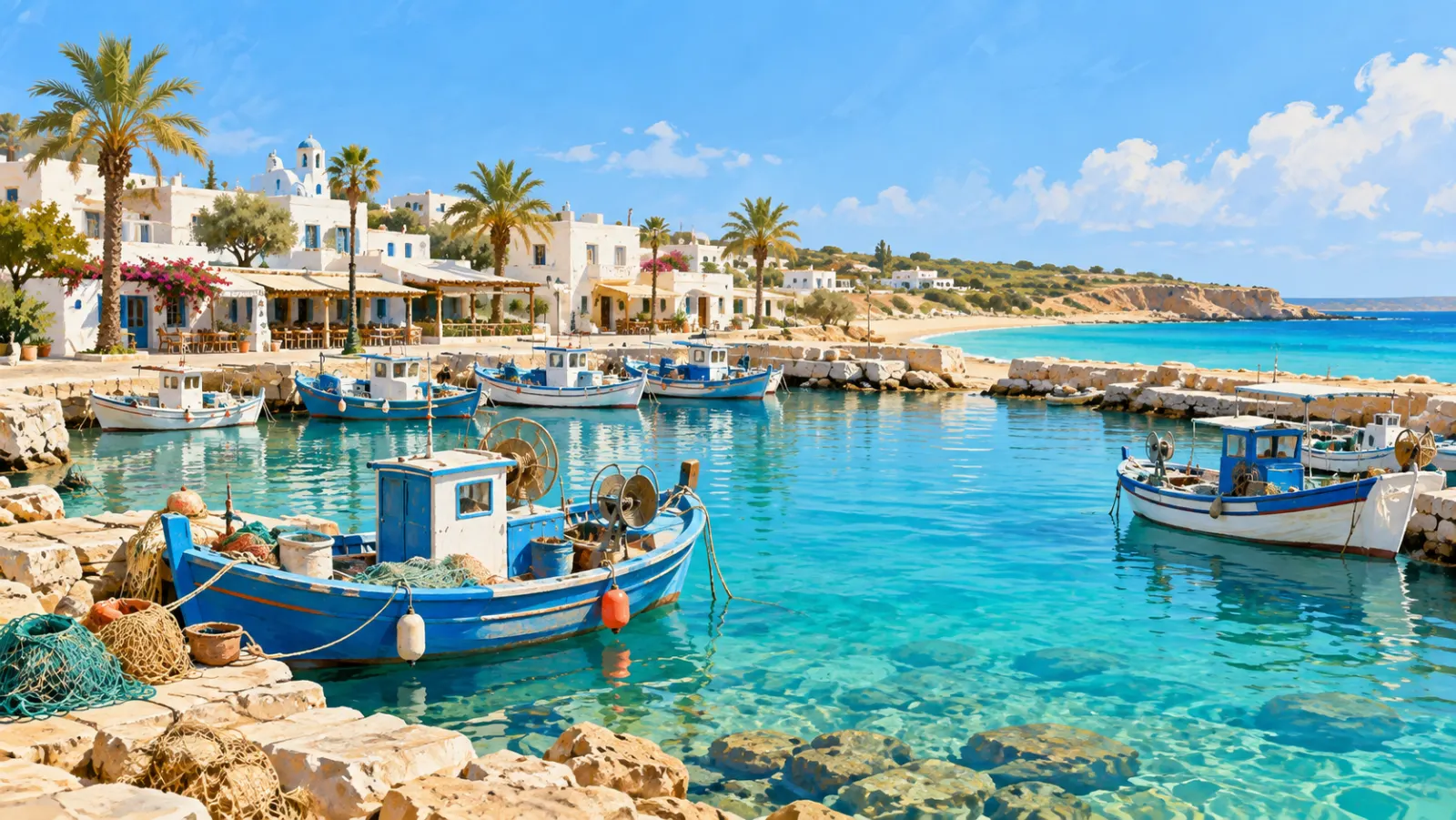
The Famagusta free area (colloquially Ayia Napa, though it also includes Protaras, Paralimni and Kapparis) is the south-eastern tip of the Republic of Cyprus. Europe's club capital in the early 2000s, Ayia Napa is reinventing itself as a family-oriented Mediterranean resort, with a quieter year-round expat community behind the summer reputation.
Areas and everyday life
Year-round expats live particularly in Paralimni and Protaras. The community is the smallest of the four cities covered here, but committed: British families who came in the 1990s and 2000s and never left after a holiday, with a tight social network around the Protaras seafront and the inland villages; Lebanese families who became a year-round presence after the 2019–2024 instability in Beirut; and Israeli families, the fastest-growing group since 2023, who generally choose Protaras for its more residential feel. Cypriots mostly live in the inland villages (Sotira, Liopetri, Frenaros) rather than the resort towns.
The resort towns slow down dramatically from November to March. In return you get the warmest sea on the island (typically 27–28 °C in summer, well into October) and the country's highest concentration of Blue Flag beaches.
Getting around
This is the part of the Republic furthest from both major airports. Larnaca Airport is 35–45 minutes from Protaras and 40–50 minutes from Ayia Napa, depending on traffic; there is no airport closer, and Paphos is 2 hours away.
Healthcare
Paralimni General Hospital is the public (GeSY) hospital for the whole area. It handles common emergencies and routine care, but its specialty depth is the thinnest of any major hospital on the island: anything complex (cardiac surgery, oncology, neurosurgery) is referred to Larnaca, Nicosia or Limassol. Private clinics are limited but growing: ECO Larnaca has a Paralimni satellite, and a handful of private GPs and dentists serve the resort towns year-round.
Families with chronic conditions sometimes drive to Larnaca or further three or four times a month. Emergency response is reasonable in the resort towns and can take 15–25 minutes in the inland villages (Liopetri, Frenaros, Sotira); 112 works throughout. Many full-time expats supplement GeSY with private insurance specifically to access Limassol or Nicosia specialists without GeSY referral delays.
Schools and childcare
The area has the thinnest international-school market of the four cities: the only registered English-language private school is Xenion in Paralimni, plus a handful of preschools and kindergartens. Public Greek-medium schools in Paralimni and Sotira are good and have absorbed a meaningful number of expat children, particularly in primary.
Secondary school is the genuine challenge: most families commute to The American Academy Larnaca (35–45 minutes each way) or one of the Larnaca British schools, or board. For families with several school-age children it is the most-cited reason for choosing Larnaca instead. The area lacks any local university campus; students typically attend Nicosia or Limassol institutions or go abroad.
Beaches, food and things to do
This region has the strongest beach inventory on the island. Nissi Beach (Ayia Napa) is the classic: pure white sand, shallow turquoise water, beach bars, lifeguarded. Konnos Beach, between Ayia Napa and Protaras, is a small protected cove with pine trees down to the sand, frequently voted Cyprus's prettiest beach. Fig Tree Bay (Protaras) is the family default: long, sandy and gently shelving, with a small island swimmable from shore.
Cape Greco national park has sea caves, cliff jumps and the 'Bridge of Lovers' rock arch. The area has the country's highest concentration of water-sports operators, several theme parks (WaterWorld is one of Europe's largest waterparks) and diving on the sunken MS Zenobia off Larnaca, one of the world's best-rated dives. The sea is swimmable from May into October, a longer season than anywhere else in Cyprus.
Monthly costs
Similar to Larnaca year-round, with seasonal quirks. Off-season sample costs for a couple owning a two-bedroom apartment outright in Protaras or Paralimni.
| Item | Per month |
|---|---|
| Utilities | €170–€260 |
| Resort-complex common charges | €150–€280 |
| Municipal | €25–€40 |
| Groceries | €430–€590 |
| Restaurants 3 times a week (summer doubles) | €220–€370 |
| One car | €170–€260 |
| Private health top-up | €70–€140 per person |
| Total | roughly €1,470–€2,170 off-season |
Resort amenities push common charges above equivalent Larnaca buildings. From June to September restaurants charge resort prices (30–50% higher than off-season) and supermarket lines are long; owners often hold off big spending until October.
Long-term rentals are scarce because most units are aimed at holiday letting: expect €750–€1,400 for a year-round two-bedroom, and significantly more if the lease includes the high season. Bazaraki listed only 41 two-bedroom apartments for long-term rent across the whole Famagusta free area on 1 October 2026, with a median asking rent of about €1,100 and half between €780 and €1,400.
Frequently asked questions
Is the area dead in winter?
What about Famagusta proper, the closed city of Varosha?
Is the area good for remote workers?
Practical notes
- Internet, water and power are reliable.
Explore Ayia Napa by topic
Guides, directories and tools for daily life, filtered to Ayia Napa.