
City guide
Living in Nicosia
Nicosia (Lefkosia) is the capital of the Republic of Cyprus and sits inland, so it has no beach of its own. The old walled city is split by the UN-patrolled Green Line, and this page covers the government-controlled southern part only.
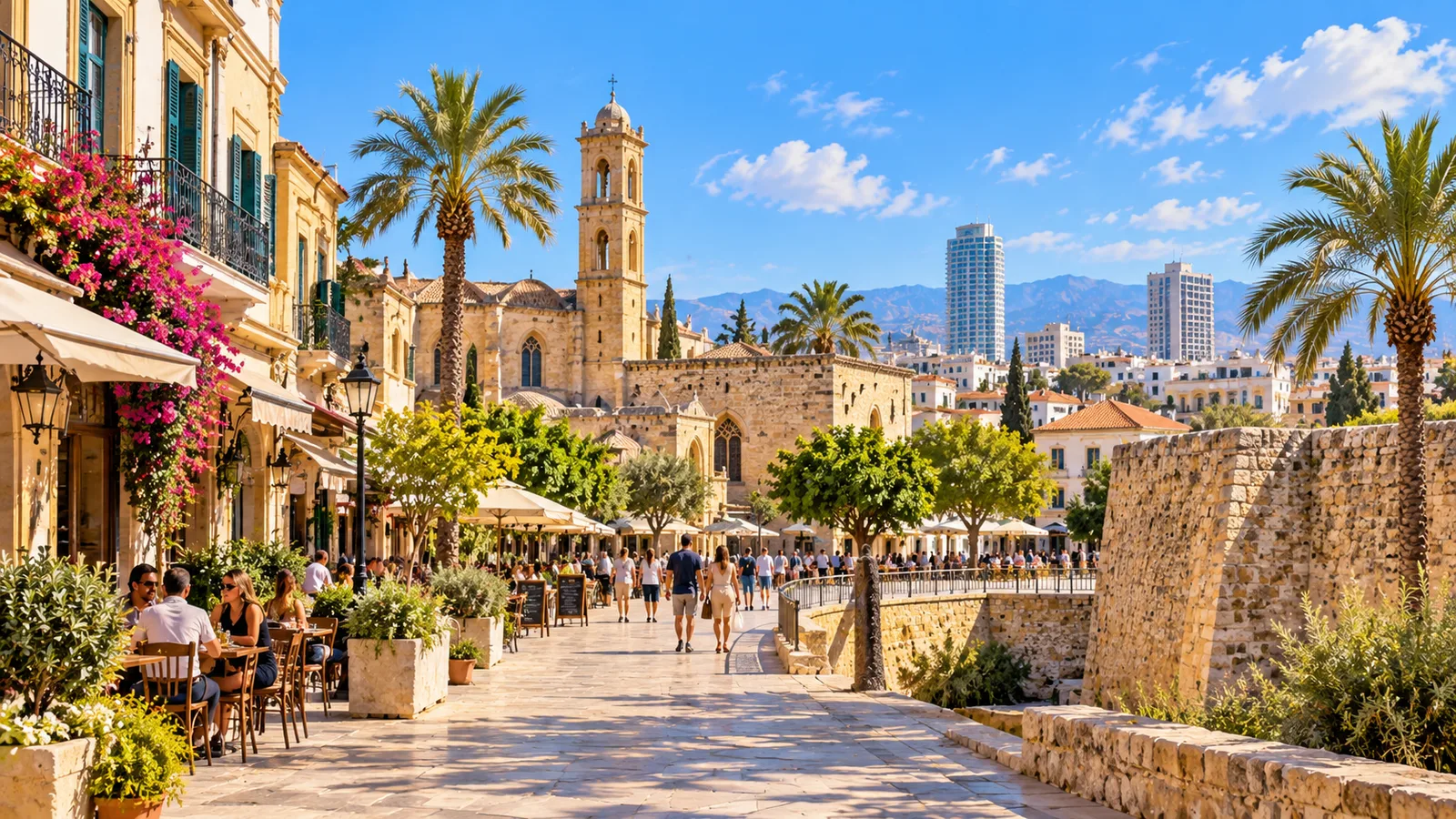
Areas and everyday life
The Venetian walls ring the old city. Inside them, Eleftheria Square, designed by Zaha Hadid, links the old town with modern Nicosia, and the pedestrian Ledra and Onasagorou streets are the commercial heart.
Getting around
Urban buses are run by Cyprus Public Transport. A single costs €2.70 cash or €2.00 on a Motion card; the night single (21:00 to 04:00) is €4.70 cash or €3.50 on a card. A 30-day pass is €66.90 on a personalised card or €93.60 on an anonymous card.
An all-cities ticket covering Nicosia, Larnaca, Limassol, Paphos and Famagusta costs €20.00 a day, €75.00 a week or €225.00 a month (weekly and monthly need a personalised plastic Motion card).
Healthcare
Nicosia General Hospital (215 Old Nicosia-Limassol Road, 2029 Strovolos; tel. 80000408) is a public hospital run by the State Health Services Organisation (SHSO). Its Accident and Emergency department is for emergencies such as accident injuries: a nurse assesses each patient on arrival (triage), then registration costs €10.00. Patients in critical condition are seen without registering first.
Call 112 in an emergency, as anywhere in the EU.
Schools and childcare
The English School in Nicosia lists tuition of €9,550 for 2026-27, with 10% off for a second child and 50% off for a third studying there at the same time.
Public Greek-medium schools are free.
Beaches, food and things to do
In the old town, the Leventis Municipal Museum and the State Gallery of Contemporary Art are both free to visit, and Hamam Omerye is a working bathhouse. The Strovolos Public Market runs every Friday from 06:00 in the covered GSP stadium car park.
Frequently asked questions
Does this page cover the north of Nicosia?
Does Nicosia have a beach?
Explore Nicosia by topic
Guides, directories and tools for daily life, filtered to Nicosia.